
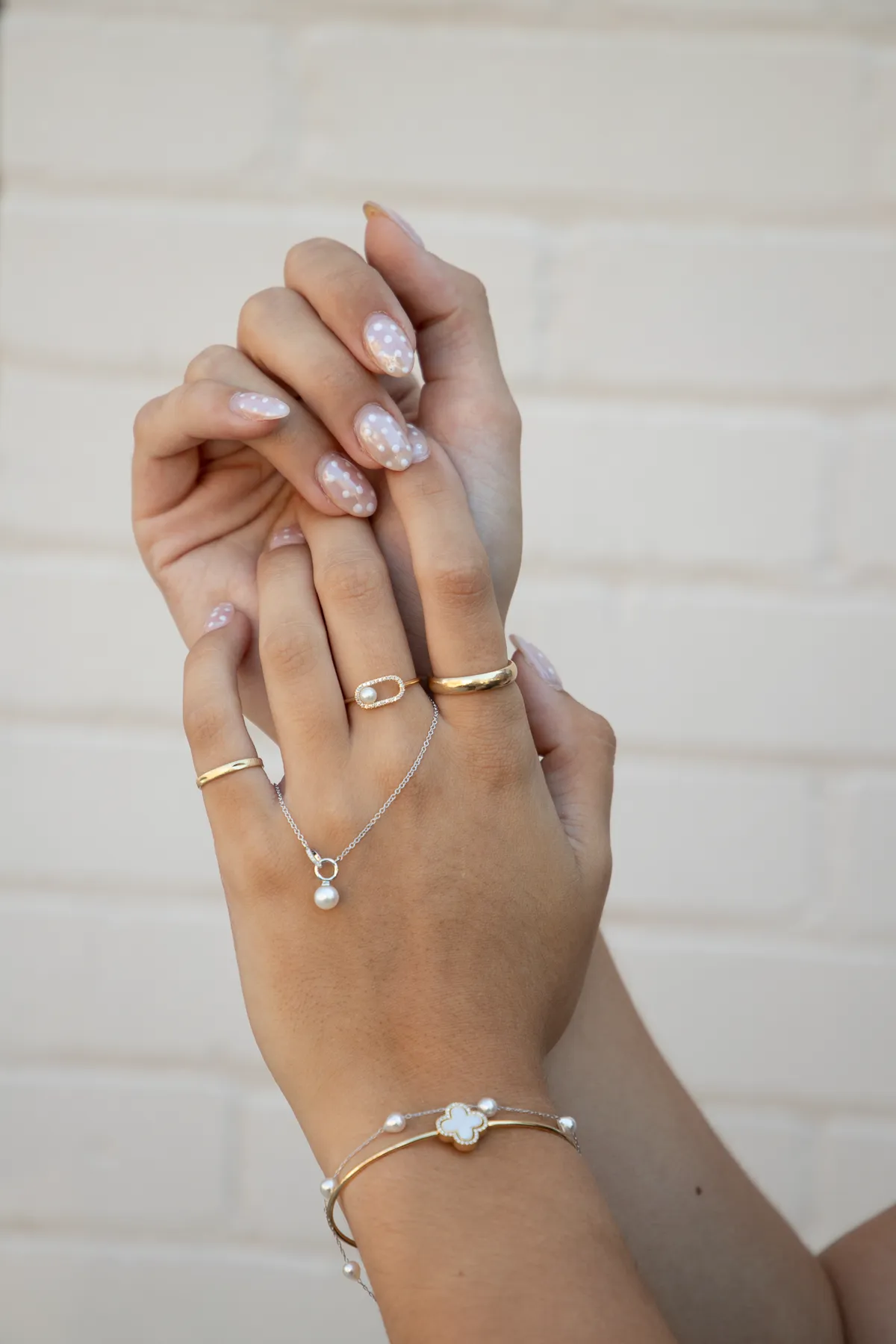
Known for their timeless beauty, pearls are June's most beloved birthstone. Alongside moonstone and alexandrite, they make June a month filled with elegance and rarity. Available in a range of colors and price points, these gemstones offer something for every collection.
Pearls have a long and fascinating history. For thousands of years, cultures around the world have cherished them for their beauty and elegance, making them one of the most timeless gems. Along the way, they have curated a variety of beliefs and traditions. Ancient Greeks believed pearls were formed by lightning strikes at sea, while Chinese folklore linked them to dragons and mermaids. In many cultures, pearls were seen as symbols of prosperity and good fortune, making them popular gifts for weddings, births, and other milestones. These stories and traditions continue to add to the lasting appeal of pearls today. Although we now know the science behind how pearls form, their natural creation is still just as fascinating.
Natural pearls are formed spontaneously in the wild. This rare occurrence happens when an irritant, like a grain of sand or piece of shell, gets trapped in the soft tissue of a mollusk. To defend itself, the mollusk creates layers of nacre over the intrusion. Over time, these layers create the lustrous gem we call a pearl.
Natural pearls are incredibly rare. Due to environmental changes and over-harvesting, natural pearls have become even more rare. To keep these beautiful gems accessible, cultured pearls were introduced. Cultured pearls are genuine gems that are just grown with the help of humans. Pearl farms, located across the world in both freshwater and saltwater areas, are a clean and protected space for pearls to grow. To create a higher outcome of pearls, specialized technicians carefully insert an irritant into the mollusk. From there, the natural process takes place until they are ready to be harvested.
There are four main species of cultured pearls, giving a range of colors, shapes, and sizes to choose from. Akoya cultured pearls are the ones most likely familiar to the common person. They are white or cream colored, perfectly round, and have high luster. They are grown in Japan and China. Tahitian pearls, grown off the islands of Polynesia, are sought after for their exotic, dark colors. South Sea pearls, named for the waters they are grown in, are unique for their size and colored overtones. Freshwater cultured pearls are mainly grown in China's lakes and rivers. They range in both size and color, with the capability of also being dyed different colors.